

Summary
For children, talents and abilities that support managing procedures, directing initiatives, and directing their team members toward goals are referred to as leadership skills. Take into account various viewpoints while making crucial judgments, for instance. When you respect people, you’re more likely to do so since you’ll be listening to them, taking notes, and learning team spirit In a recent poll of 650 companies, the National Association of Colleges and Employers revealed that the most in-demand qualities in potential new recruits were leadership abilities.
What Characteristics Make a Good Leader?
A good leader possesses a variety of traits. I’ve whittled it down to five that, in my opinion, are inclusive of other qualities and, as a result, can be seen as the more crucial characteristics of a good leader.
- Initiative.
- Communication.
- Confidence.
- Integrity.
- humble & teachable.
- Work ethic.
- Critical thinking.
- Mediation and conflict resolution.
- Adaptability.

Parents can help children in building their personality. Children look up to their parents and take up a lot of qualities, values, morals, and skills. The way of parenting, therefore, becomes a crucial part of the development of skills.
Read: How can Parents develop Leadership Skills in children?
Why is leadership important for kids?
- Children who possess leadership qualities can take charge of their life and influence events.
- Children who are given a sense of leadership are more self-assured and are better able to work as a team, solve issues creatively, and collaborate with others. Children have various possibilities to learn responsibility via leadership.
How to inculcate leadership qualities in children?
1. Set an example for kids in leadership
This is particularly true of your parental position. You may instill responsibility in your kids by letting them see how successfully you manage your professional and personal responsibilities.
2. Put the focus on endurance
The most effective leaders develop the ability to manage failure just as graciously as triumph. Instead of shielding upcoming leaders from disappointment, it’s crucial to expose them to it. When the other team wins or a new class president is chosen, kids need to learn how to accept defeat and move on, thereby building resilience and Confidence.
3. Fostering confidence in children
Children should be given chances to perform well, and when appropriate, praise should be given. Look for ways to set up scenarios that require problem solving. This not only boosts their Confidence but also contributes to their Personality Development.
4. Developing problem-solving skills is something that kids can learn
Allow kids to make small decisions, like which activity they want to participate in, and then give them more opportunities to make decisions as they grow as they discover the ideas of accountability and the effects of decisions.
5. Teach kids how to collaborate with others in a group setting
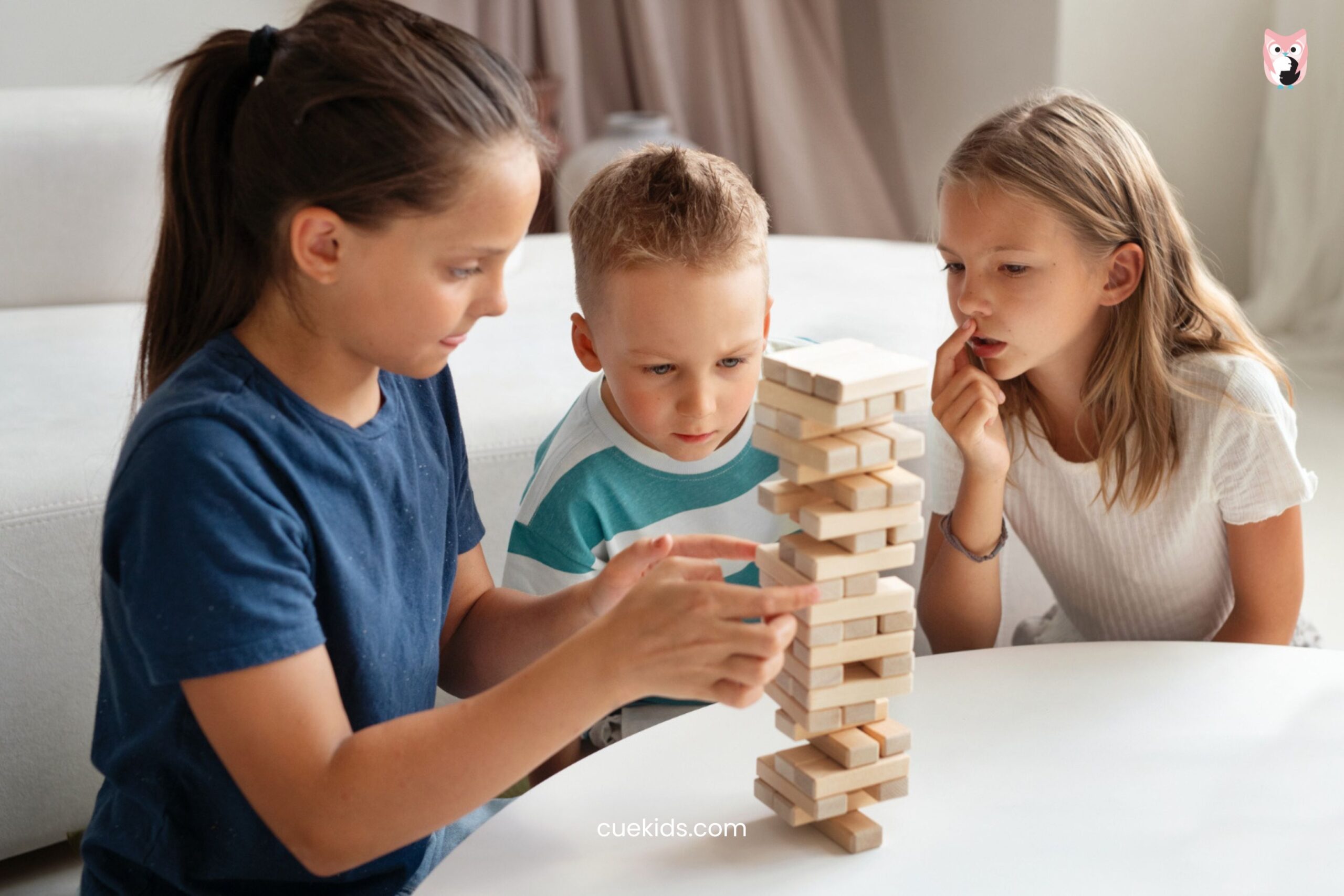
Children can learn to collaborate through group projects or team sports. This would help them to understand and respect others’ opinion while teaching them to put their own visions and missions crucial aspects of leadership.
6. Help kids create a plan or a strategy to deal with a situation or a problem
Both adults and children avoid taking on leadership responsibilities because they feel overextended. Teach kids how to divide tasks into manageable ways to complete them and build their Confidence in leading initiatives.
7. Encourage kids to pursue interests they have
They might develop a passion for it, feel at ease, and eventually take on leadership responsibilities.
8. Charades
Not all communication is verbal. Children can control and use non-verbal’s more effectively if they have the chance to see how their non-verbal’s are portrayed.
Know more about our Leadership Course for Kids
Conclusion
Today’s leaders can help the next generation get ready for a future in business by taking small steps in that direction. Each of these ideas will not only produce better leaders, but they can also improve academic performance and interpersonal relationships in young people — shaping habits and mindsets that stay with them throughout their entire lives.
Leadership for Kids: Personal Coaching by CueKids
What it is: One-on-one coaching designed to fast-track leadership and people skills in kids, tailored to each child’s strengths and goals.
Who it’s for: Young achievers looking to become more visible leaders, and kids who want to sharpen specific skills like communication, confidence, and emotional intelligence as part of their broader personality development.
What it covers:
- Communicating with clarity and confidence in group settings
- Reading body language and social cues to lead more effectively
- Building emotional intelligence to connect with and motivate peers
- Applying leadership skills in real-world situations like group projects and teamwork
Format: Individual coaching sessions, scheduled around the child’s needs
How to start: Book a free trial, or contact CueKids directly at +91 70455 40534.
Group courses focused on personality development are also available for kids who prefer to build these skills alongside peers.
References:
https://www.google.co.in/search?q=leadership+quality+in+kids&ie=UTF-8&oe=UTF-8&hl=en-in&client=safari
https://www.indeed.com/career-advice/career-development/demonstrate-leadership-skills
https://www.indeed.com/career-advice/resumes-cover-letters/leadership-skills
FAQ’s
FAQ’s
Leadership skills help children take responsibility for their actions, make thoughtful decisions, and handle challenges with confidence. Over time, they learn to influence situations positively instead of feeling overwhelmed by them. This builds independence that supports them in school, friendships, and eventually their careers.
Yes. Leadership isn’t about being loud – it’s about taking initiative, thinking clearly, and working well with others. Even quiet children can become strong leaders when they are encouraged to express ideas, solve problems, and build confidence step by step.
When children learn to accept defeat and move forward, they build resilience. Instead of giving up, they learn to reflect, improve, and try again. This mindset strengthens their confidence and prepares them for real-world challenges.
Working in teams teaches children to listen, respect different opinions, and collaborate toward shared goals. These experiences shape empathy, communication skills, and responsibility. Over time, this strengthens both their leadership ability and overall personality development.
When children are allowed to make small decisions and understand the consequences, they develop accountability and critical thinking. Gradually, they become more confident in handling bigger responsibilities. This builds strong judgment skills that benefit them throughout life.






Greɑt blog you hаve got here.. It’s harɗ
to find high quality wгiting ⅼike yours these
days. I truly apрreciate peoplе ⅼike you! Taқe care!!