Interact with Pre-schoolers Using Effective Body Language

Summary

Long before children master words, they are reading our faces, posture and tone with remarkable accuracy. The way we kneel to their level, repeat patiently, smile warmly or unknowingly show tension shapes how safe they feel to express themselves and how confidently they learn. When adults become aware of their own body language and respond with consistency, children grow up clearer in communication, steadier in emotion and more trusting in relationships. In these small, everyday interactions lies the foundation for stronger social understanding and healthier personality development over time.

What he lacks in subtle hand movements, the small child makes up for with his body postures. He shows his delight by jumping widely up and down on the spot, and he signals his boredom with a dramatically slumped body and shuffling feet. Frustration may be shown by a rhythmic swinging of the body from side to side; anger by stamping his feet on the ground.” – Desmond Morris, The Child.

For an infant, one of the most entertaining games is probably that of peek-a-boo. Is it because he loves to realize that objects can still be there behind the curtain, what is called ‘object permanence’, or is he just enjoying your face of surprise when the curtain is lifted? At around the age of two to three, you will see the same kid enjoying the game of hide and seek. Once again, is he really enjoying being discovered or does he love to see shock and surprise on your face, depending on who is hiding and who is seeking?

These are ways in which infants and toddlers start learning to read people’s expressions. As adults, we can make use of body language skills to get our point across more effectively to kids of this age. This route of communicating is especially important since the child is still developing a hold on language.

We need to learn to not only read the child’s non-verbal cues but use the same ourselves so that interaction can become easy and fun. There are various roles that these cues can play in the development of the child.

1. Teaching consistent gestures early on:

Until the toddler picks up words and starts uttering them to communicate with you, he will need gestures and signs to do the same. Parents can take the lead and teach the child various gestures to mean different things as early as when he is an infant. This will make the child more expressive and it will be easier for him to explain exactly what he wants to his family.

For example if he understands what you are saying he should nod up and down. If he wants to eat, you might teach him to show a hand with bunched fingers pointing to his mouth. The cue to remember here is consistent gestures. You cannot also teach him to rub his hand on his tummy to show he is hungry. That could perhaps then be reserved for when his tummy is aching. The simpler and more consistent the gestures, the easier it will be for the small child to communicate with you.

 You may also like to read : 6 Important Pillars of Communication For Kids

2. Display emotions more obviously:

The infant has only a few ways of communicating what he wants, two of the major ones being laughing when happy and crying when pleased. As this infant grows up, parents can play a role in explaining how he can react differently to different situations. For the child to recognize and separate one emotion from the other, the adult would have to show elevated emotions so that the child can pick the difference early.

When these same kids start learning to express themselves, you will see emotions on an elevated level, as described by Desmond Morris in the beginning quote. They have yet not learnt to control their emotions, leave alone hiding the same. The “display rules” would be taught later on by society.

3. Repeat concepts with patience:

People looking to explain concepts to the child need to exert great patience while teaching. For example, understanding honesty by itself can be a toll on the child. Unless he is not clear about it, he will not be able to practice it. You could use stories, situations and imaginary friends to teach this concept in different ways. If you get impatient, annoyed or angry with him, he will shift into a “defensive zone” and will not be able to open up to the concept quickly. The gestures used by adults are enough to convey the state of mind of the adult to the child.

If at all you see the child shifting into a defensive zone, you will probably see him with a bowed head, or crossed hands, or stepping back, or with a sad look on his face. Catch yourself in time before you discourage him from learning the concept you are trying to teach. Go back to repeating the story you told him earlier or try a new approach. When you do explain, use open arms and a smile on your face so that the child is not naturally defensive.

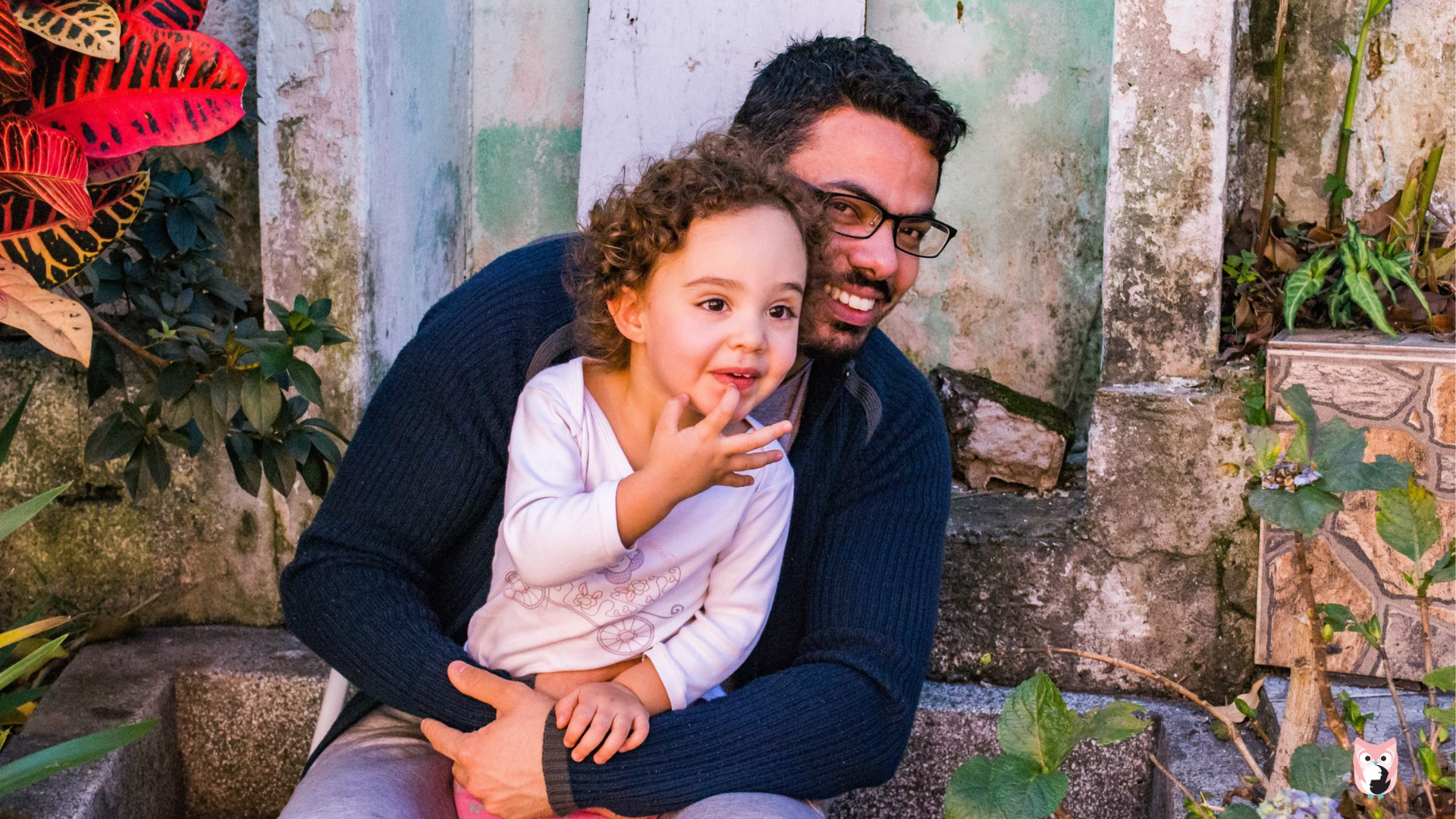
When you want your message to get across to the child, sit down to his level before you begin talking. It is a biological response in all humans to feel threatened when a taller person stands right next to them and speaks. Crouching down to the child’s height will bring you at the same ‘level’ as him so he will be more accepting to hear you out. Also avoid hands on hips. Your taller frame will only be accentuated and appear bigger, making your child naturally defensive. For example, Robert A Hinde in his book, Non-verbal communication, mentioned that it is suggested by many authors that smiling plays an important role in the development of a child’s attachment to their parent, especially mother; hence in personality development of the social behavior. Thus try to display positive gestures always.

4. Avoid threatening postures:

When you want your message to get across to the child, sit down to his level before you begin talking. It is a biological response in all humans to feel threatened when a taller person stands right next to them and speaks. Crouching down to the child’s height will bring you at the same ‘level’ as him so he will be more accepting to hear you out. Also avoid hands on hips. Your taller frame will only be accentuated and appear bigger, making your child naturally defensive. For example, Robert A Hinde in his book, Non-verbal communication, mentioned that it is suggested by many authors that smiling plays an important role in the development of a child’s attachment to their parent, especially mother; hence in development of the social behavior. Thus try to display positive gestures always.

5. Lead by example:

Children are sharp to observe contradictions. If you are teaching him a concept, you need to lead by example. For example, if the child is to learn that staying happy will make life easier for him, parents need to smile more in each other’s company. Only then will the child learn to feel the same way. If you want your child to become a good listener, listen carefully, look into his eyes and nod when the child speaks to you. If you are looking into your phone or pouring over your newspaper and swearing to your child that you are listening to his story, you are teaching him to listen in the wrong way.

Similarly, when developing sense of taste, the child can guess which food is perceived to be ‘good’ by how adults react to the food on the dinner table. You need to be careful about this before reacting to the food presented in front of you. I have personally experienced my daughter question the goodness of brinjals by citing the example of the adult who avoids eating them.

6. Beware of multiple messages:

When there are multiple adults in the house, they need to be careful that one particular gesture is not taught to have different meanings. Similarly the same action of the child cannot encourage different reactions from various adults.

Grandparents might show happy emotions when the child stops crying after having candies whereas the mother might show anger towards the same action. Similarly, the father might be excited when his close friend is coming home to visit him but the mother is downcast as she had planned to go out with her family on the very same day and would now have to stay back home for the guest. In situations like these, the child would get very confused about how he is supposed to react and might end up shrinking into a shell from his childhood days.

In all of the above examples, the adult might be thinking that not expressing his or her state of mind would keep back the emotion from the child. Kids are normally smarter than their parents estimate, especially when it comes to picking up the expressions of people they spend a lot of time with.

Conclusion

All this does not mean that adults have to be on their toes all the time when the child is growing up but it does mean that preaching is not going to get your child to believe in what you say. If you really want the child to learn, you need to be communicative and open as a family. You also need to understand and accept that the individuality of the child comes from a mixture of all that he sees and experiences around himself.

1. Why is body language so important for pre-schoolers?2026-04-10T05:57:53+00:00

At this age, children understand far more than they can say. When adults use clear, warm gestures and expressions, it helps children feel safe and understood. This builds confidence in communication long before words are fully formed.

2. How do consistent gestures help my child in the long run?2026-04-10T05:58:50+00:00

Simple, repeated gestures give your child a reliable way to express needs and feelings. This reduces frustration and builds clarity in communication. Over time, it strengthens their ability to explain themselves calmly and confidently.

3. Why should I sit down at my child’s level while speaking?2026-04-10T05:59:52+00:00

Coming down to their height removes the feeling of being overpowered. It makes conversations feel safer and more respectful. When children feel secure, they are more open to listening, learning and sharing honestly.

4. How does my own behaviour shape my child’s development?2026-04-10T06:01:06+00:00

Children notice what we do more than what we say. When you listen carefully, smile often and react thoughtfully, your child learns to do the same. These everyday moments quietly shape their social confidence and emotional balance.

5. Can mixed reactions from adults confuse my child?2026-04-10T06:03:31+00:00

Yes, children closely observe the adults around them. When the same action brings different reactions, it can make them unsure about how to respond. Consistency at home helps them develop clarity, stability and stronger self-understanding.

By |2026-05-28T06:46:56+00:00December 17th, 2020|Blog|1 Comment

Share This Story, Choose Your Platform!

One Comment

  1. […] Previous Next […]

Leave A Comment

This site uses Akismet to reduce spam. Learn how your comment data is processed.

Go to Top